The Legend of Kente
A touring exhibit on display at the Griot from June 16th to August 11th.
About the Exhibit
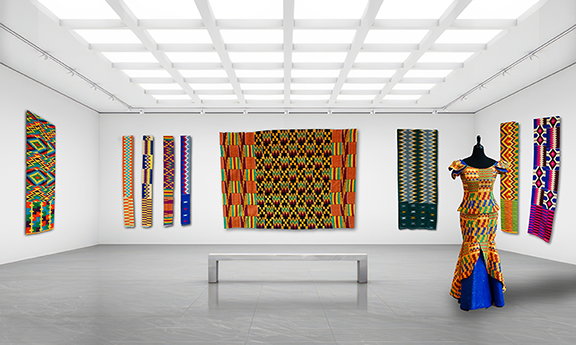
Kente is the traditional and national cloth of Ghana, West Africa. It is the most recognizable and distinguished cloth in the whole of Africa. It is a special occasion cloth used for weddings, ceremonies, and spiritual purposes. Kente has become very popular among people of color and throughout the entire African diaspora. It is an emblem of African universalism.
Kente is made of hand-woven strips of silk, cotton, or polyester on a loom. The strips are then sewn together to create a larger intricate pattern. According to Asante oral tradition, Kente weaving was inspired by Ananse, the spider of West African folklore. Two brothers, Nana Ameyaw and Nana Koragu of Bonwire, observed its intricate web and replicated its patterns in woven form.
The Legend of Kente exhibit is on loan from the Middle-America Arts Alliance. Curator Dr. Gifty Afua Benson presents the emblem of Ghana through a showcase of its master weavers from the Beatrice Benson collection.
In conjunction with the Saint Louis Art Museum (SLAM), this digital exhibition places a sample of the collection in conversation with African textile exhibits from SLAM—generating a Pan-African dialogue through textiles. Visit the Griot Museum to experience the entire collection of over 50 pieces of Kente artistry!

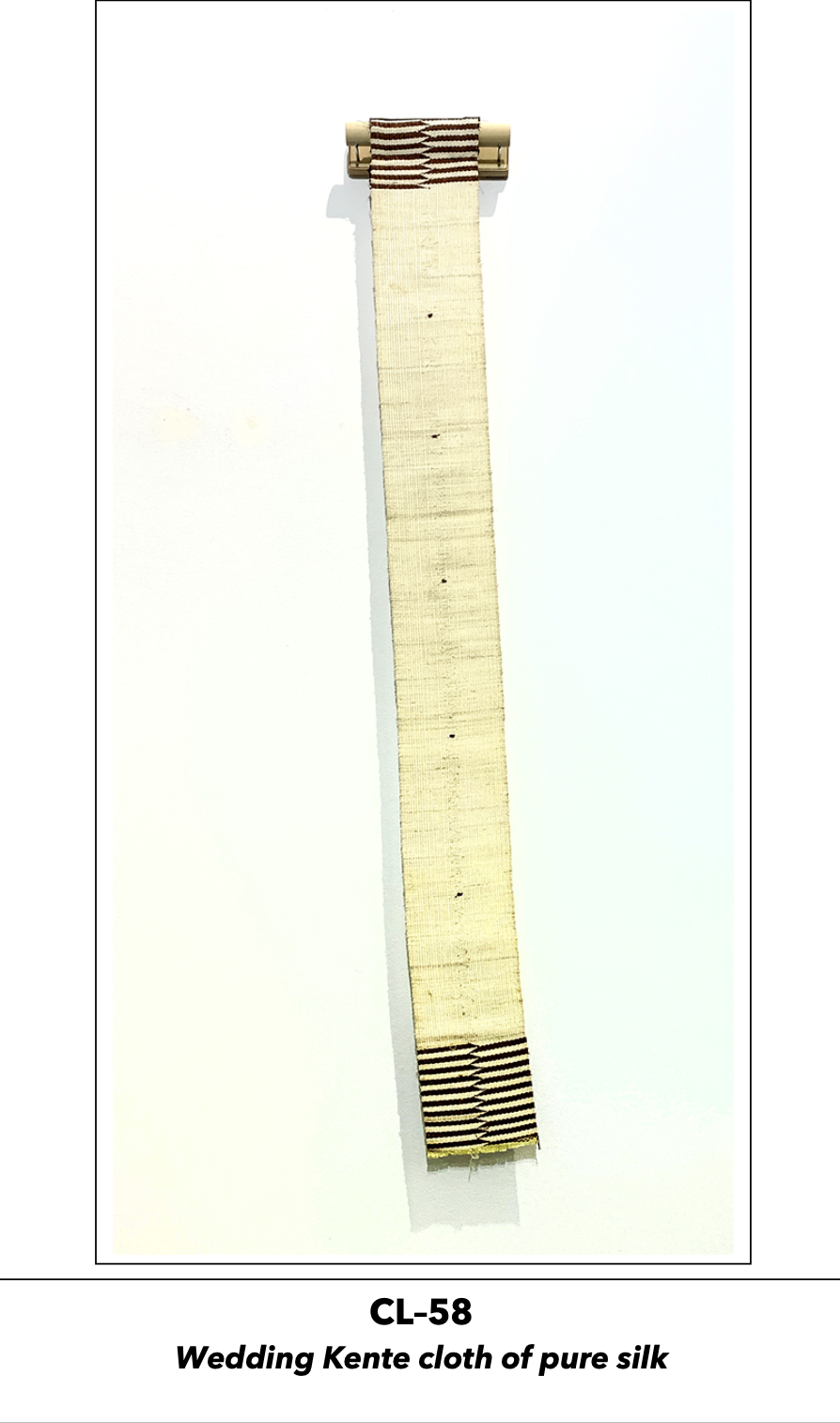
Single-strip Weaving: Wedding Kente Cloth of Pure Silk, 2015, Cotton and polyester, 45 ¼ x 4 ¾ inches on mount, Griot Museum of Black History
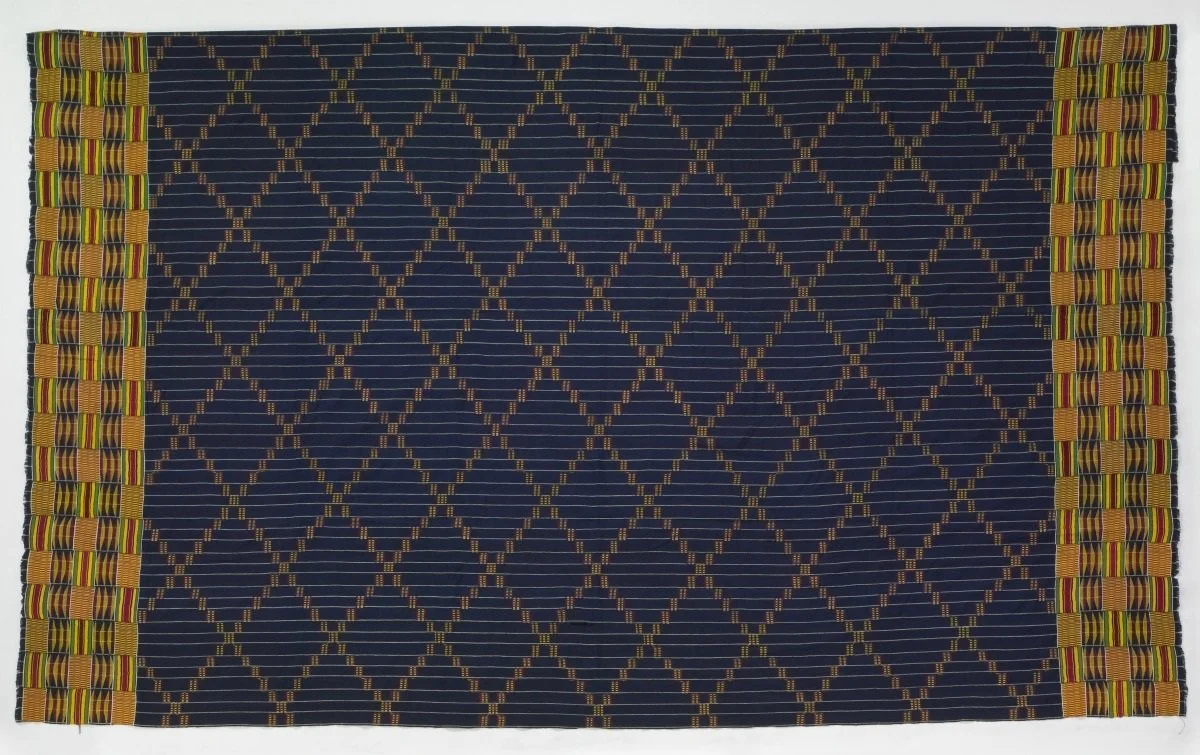
Cameroonian artist; Chief's (Fon) Gown, c.1910–30; cotton; 47 1/4 × 92 1/2 inches; Saint Louis Art Museum, Friends Endowment Fund 119:2022 | https://www.slam.org/collection/objects/70693/
The motif of this cloth is called akyempim, or “a thousand shields.” Asante soldiers carried wood and leather shields, represented at the center by a diagonal grid pattern. The presence of repeating shields implies a form of symbolic protection for the wearer. An Asante man of means and distinction clothed himself in this abundant fabric assembled from 20 narrow woven strips of cotton and silk fibers. He wrapped the textile around his body, then draped the loose end up and over his left shoulder. It demonstrates the wearer’s affiliation with the chiefly and political elite at festivals and ceremonies.
Though both pieces are Kente Cloth, Man’s Kente Cloth differs from the Wedding Kente cloth in the Kente Exhibition. Both pieces share similar materials such as cotton and silk. Man’s Kente Cloth demonstrates the typical length and width of worn Kente cloth whereas Wedding Kente cloth only shows a single-strip. Man’s Kente Cloth utilizes a navy-blue color that contrasts with the gold, red, and green bordering colors. Man’s Kente Cloth and the motif, akyempim, aligns the weaver with the chiefly and political elite, whereas the Wedding Kente Cloth is a simple, white, single-strip weaving made of cotton. It is emblematic of large-scale commercial recreations of ceremonial kente cloths. Traditional Asante ceremonial pieces utilize vivid colors, complex designs and patterns, and are made of expensive materials like silk. Man’s Kente Cloth and Wedding Kente cloth of pure silk demonstrate differences in meaning based on pattern and gender of the wearer.
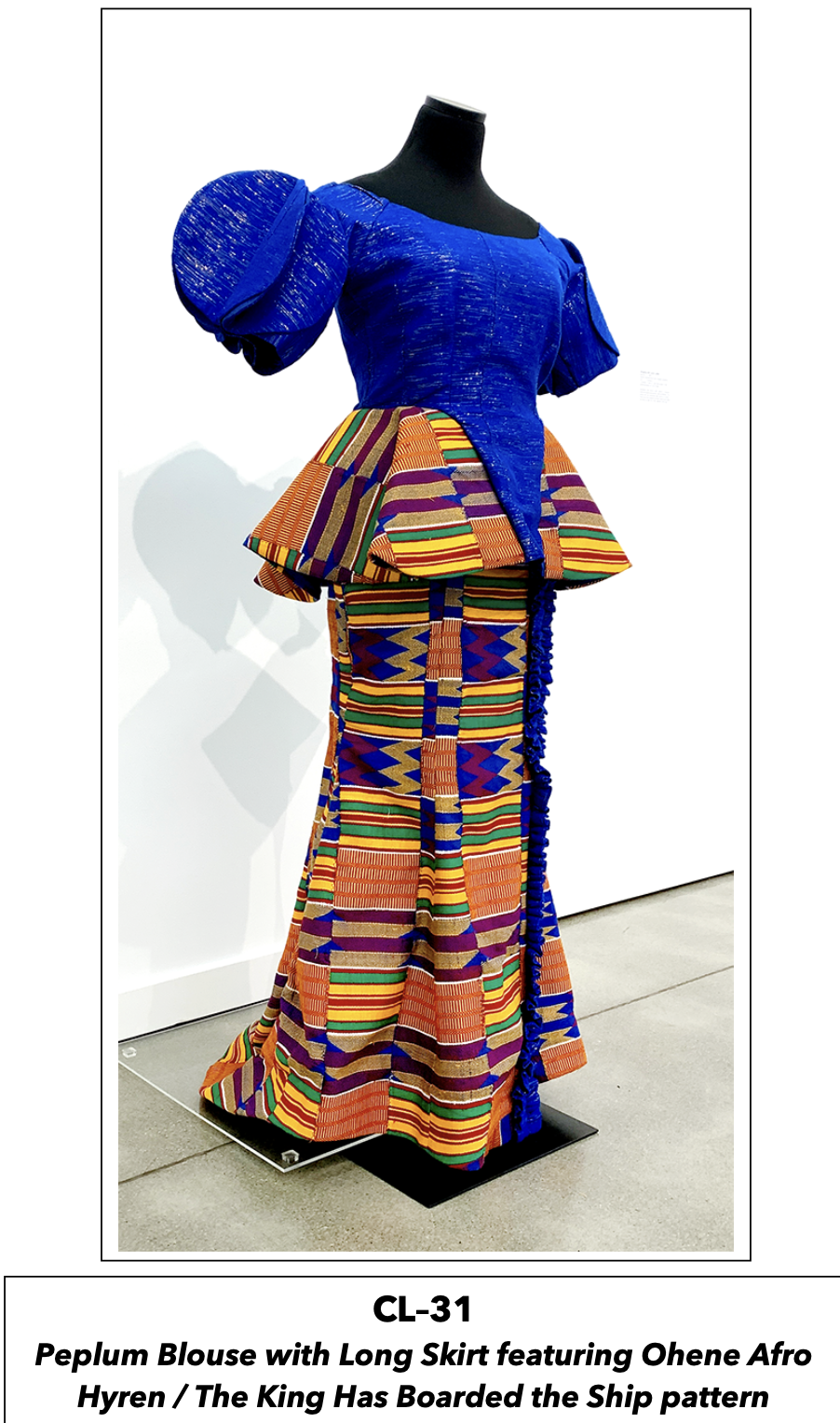
Peplum Blouse with Long Skirt featuring Ohene Afro Hyre/ The King Has Boarded the Ship pattern, 2015, cotton and polyester, 64 x 34 x 20 inches on mount, Griot Museum of Black History
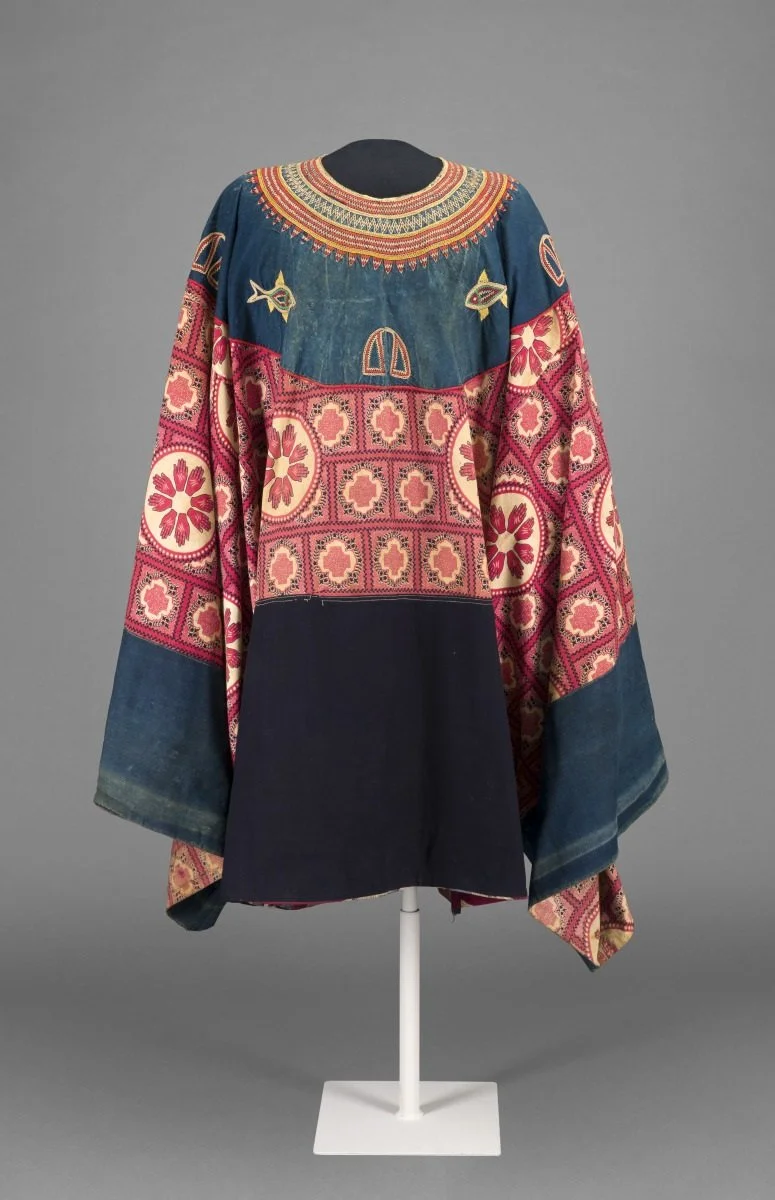
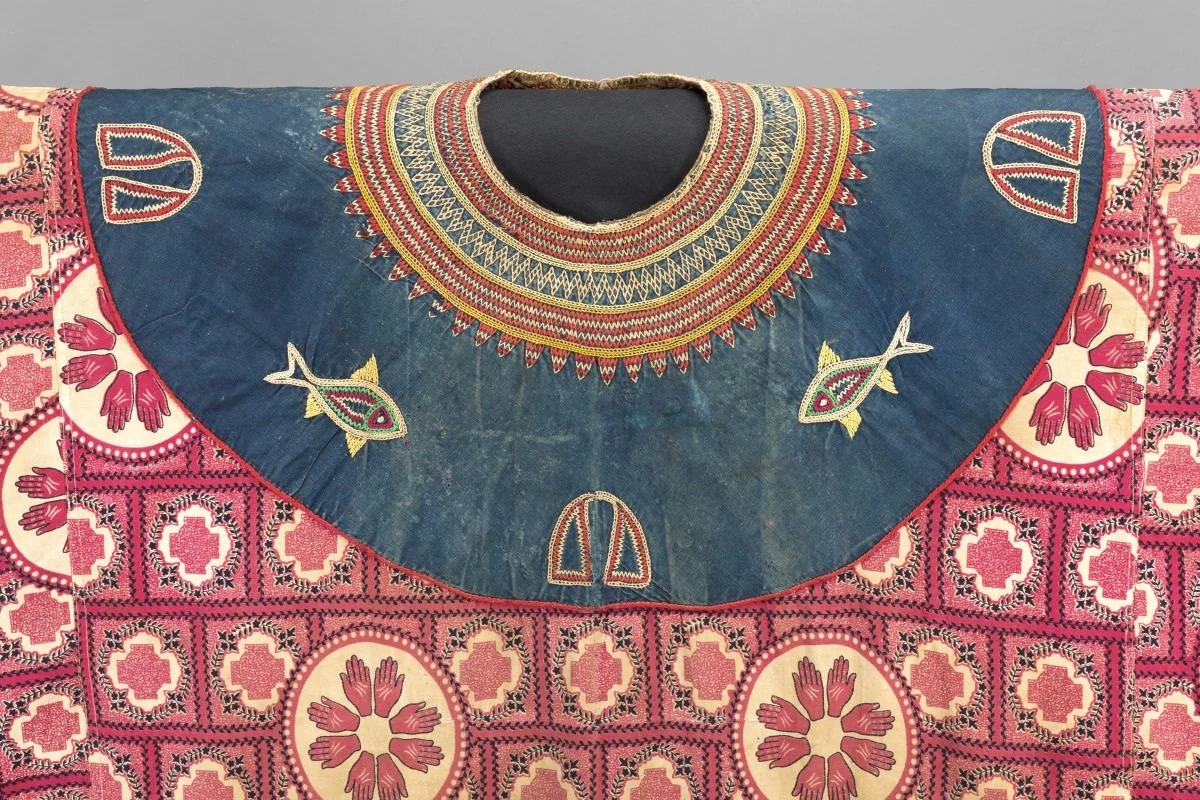
Cameroonian artist; Chief's (Fon) Gown, c.1910–30; cotton; 47 1/4 × 92 1/2 inches; Saint Louis Art Museum, Friends Endowment Fund 119:2022 | https://www.slam.org/collection/objects/70693/
Originating from Cameroon, the Chief’s (Fon) Gown differs greatly from the Peplum Blouse with Long Skirt featuring Ohene Afro Hyren. The Cameroon Grassfields Chief’s gown includes embroidery on the indigo dyed bodice and along the neck. Embroidered motifs around the neck, representing double-gongs and fish, and printed hand motifs on the bodice reinforce the royal status and reach of the fon’s (chief’s) influence. The double-gong refers to the fon’s participating in secret and sacred rites, as well as the appearance of this instrument during public gatherings where his presence is invoked. The incorporation of imported, wax-printed cloth is an unusual innovation, reinforcing the fon’s wealth and access to foreign goods. The lining of the robe is made of another wax-printed cloth. This hybrid of old and new, local and foreign, all reinforces the chief’s legitimacy and power.
Both pieces utilize the combination of locally handmade cloth with imported manufactured cloth and cultural symbolism but show how different cloth and meaning varies from country to country and culture. The Chief’s (Fon) Gown utilizes embroidery, indigo dying, and manufactured fabric to create and convey its message, whereas the Peplum and long skirt used Kente cloth making (weaving) and manufactured elements.
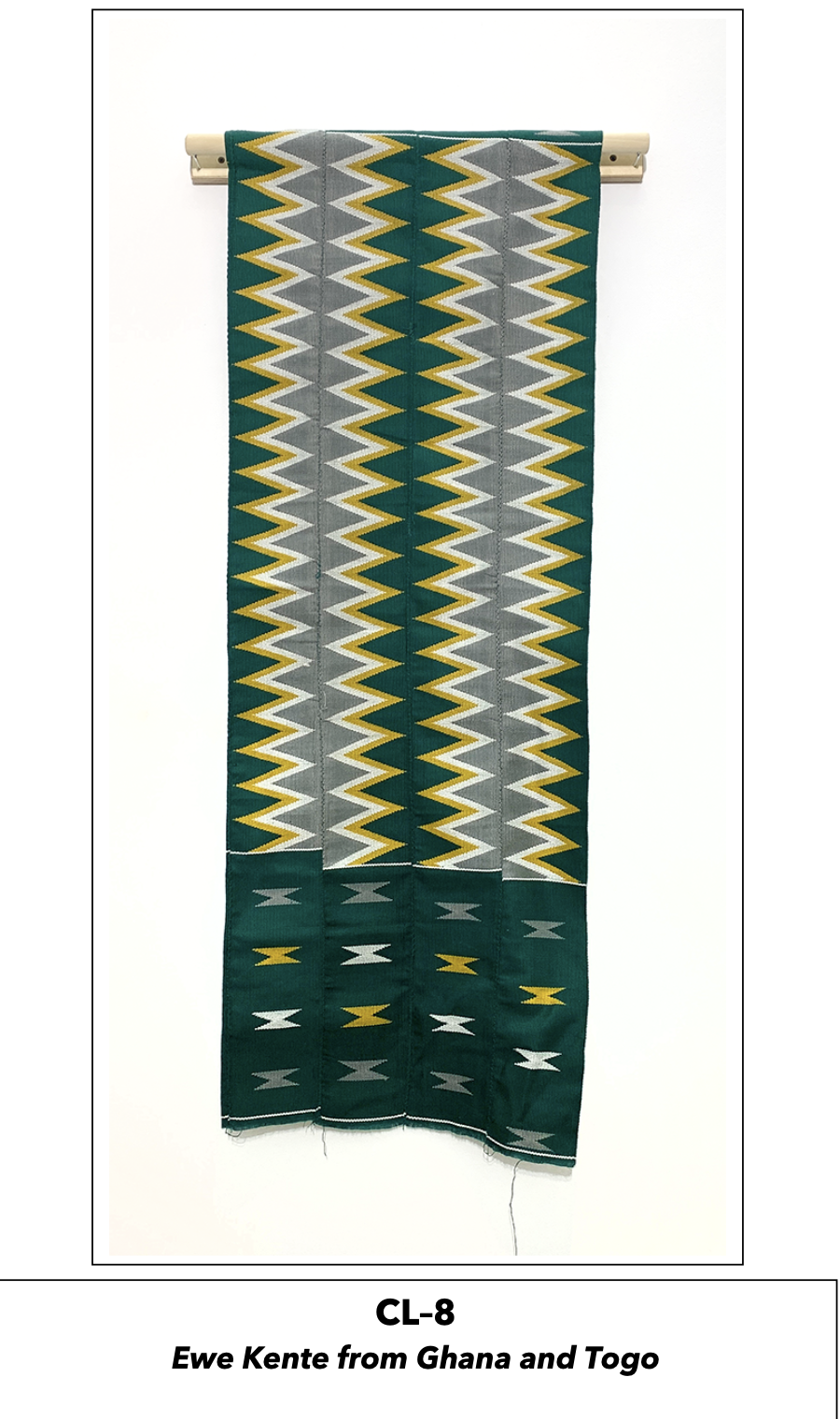
Seven-strip weaving: Ewe Kente from Ghana and Togo, 2015, cotton and polyester, 48 ¼ x 18 inches on mount, Griot Museum of Black History
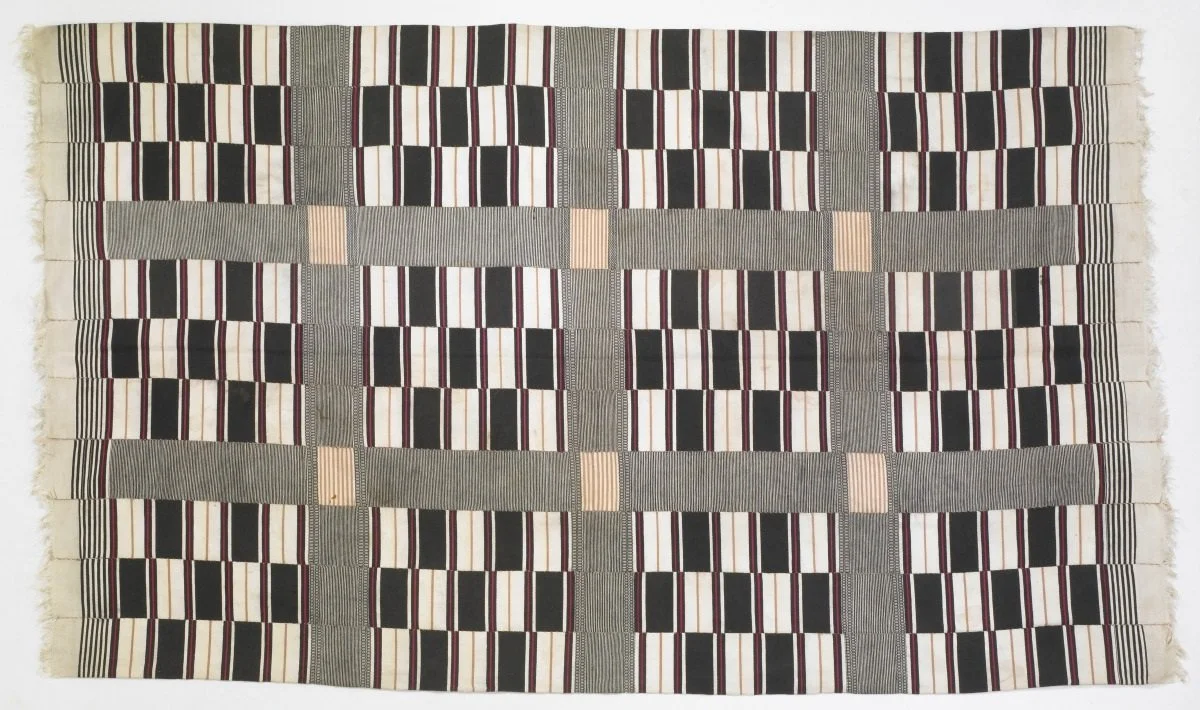
Mende artist; Display Cloth (kpokpo), c.1950; cotton; 60 x 102 inches; Saint Louis Art Museum, Gift of Thomas Alexander and Laura Rogers 94:2007 | https://www.slam.org/collection/objects/43906/
This Mende Wrapper uses the traditional plain-weave checkerboard pattern. The stripes in the blocks and the centralized composition of this cloth point to a North African weaving tradition. The checkerboard pattern is a basic West African design that can be achieved in strip weaving by alternating dark and light areas of the weft in neighboring strips. Here the checkerboard pattern is rhythmically broken up by intersecting strips of black bands with narrow, white stripes, a pattern found on many textiles from the Niger Bend region of Mali.
Similarly made, the Ewe Kente is composed of four thin vertical stripes stitched together to make a dense, narrow panel. It is the only Ewe-crafted piece in the Legend of Kente exhibit and its somber dark green color and simple composition are emblematic of the commercial Ewe Kente style. Due to the differing regions, these cloths vary in meaning, color, and purpose. While the upper gold and white nkyimkyim motif is a basic zig-zag design that symbolizes the winding, nonlinear nature of life, the kawo motif in the lower third of the panel is a regional variation of a geometric staircase design. Both pieces combine geometric patterns with alternating colors to create a visually dense appearance.